Friederike (Fredi) Otto is Professor of Climate Science at the Centre for Environmental Policy and leads World Weather Attribution (WWA), an international initiative that analyzes the influence of climate change on extreme weather events through rapid attribution studies. The physicist received her PhD in philosophy of science from Freie Universität Berlin in 2011 and moved to Oxford that same year, where she headed the Environmental Change Institute before joining Imperial College in October 2021. Her research focuses on the attribution of extreme weather events and the interface between science, law, and policy with regard to climate resilience. She is an author of the IPCC AR6 reports (2021, 2023) and co-founder of WWA, which earned her recognition in the TIME100 (2021) and Nature's Top 10 (2021). Climate Change Attribution was named a breakthrough technology by MIT Tech Review in 2020. She has received honorary doctorates from Concordia (2024) and Edinburgh (2025). Fredi is the author of Angry Weather and Climate InJustice, and her work appears regularly in major global media outlets such as the FT, Guardian, NYT, BBC, and CNN.
MovingTowardsZero
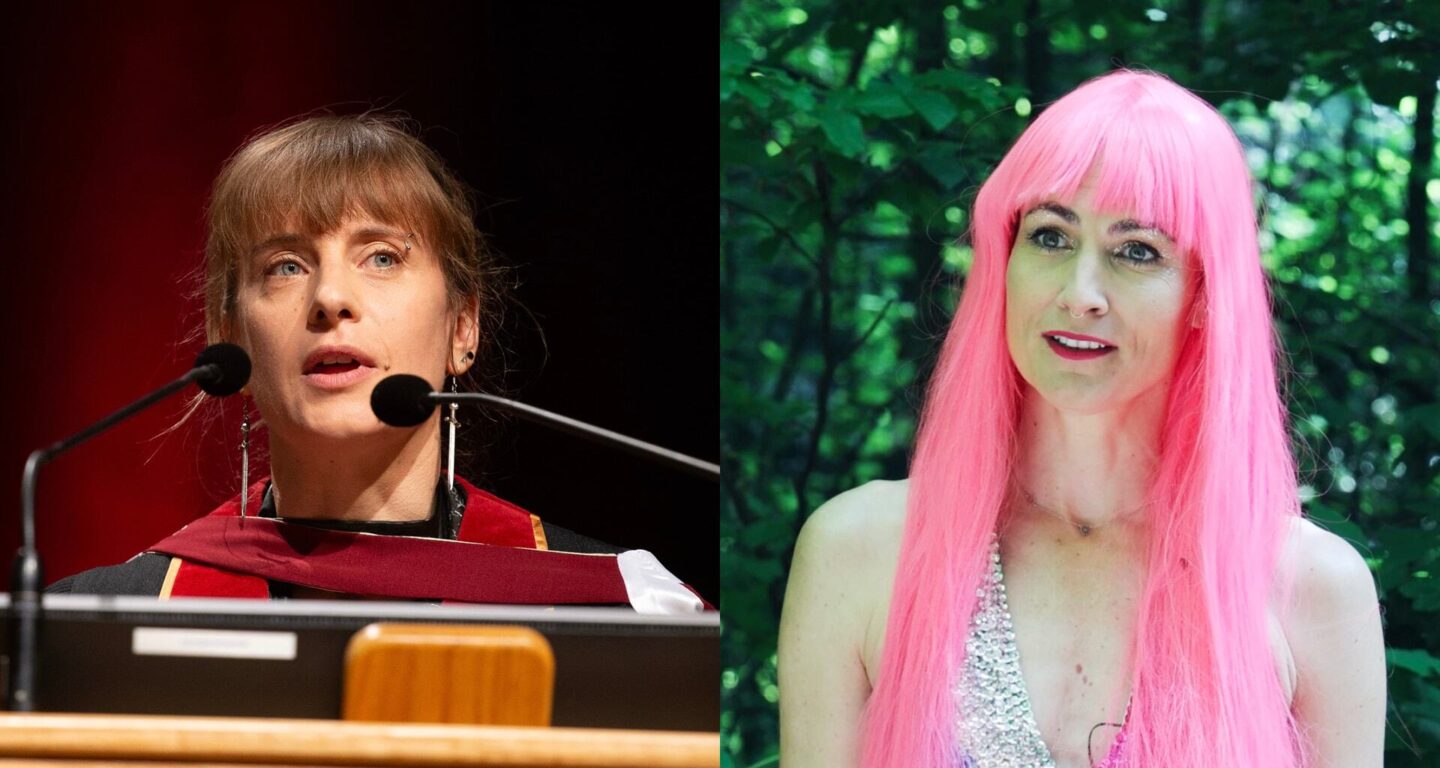
Friederike Otto, Stephanie Motz
MovingTowardsZero #4: Climate justice in an unequal world
When heat waves, floods or droughts strike, not everyone is affected equally. While those responsible for climate change usually have the resources to adapt, the climate crisis hits hardest those who have contributed least to it.
Friederike Otto is one of the world's most influential climate scientists. The physicist and philosopher at Imperial College London has played a key role in developing the new field of attribution science and can calculate in real time how much climate change has influenced individual extreme weather events. As co-leader of World Weather Attribution and lead author of the IPCC reports, she has permanently changed the global debate on climate change.
In her latest book, Climate Injustice: What the Climate Crisis Has to Do with Capitalism, Racism and Sexism, Otto makes it clear that climate change is not purely a scientific issue, but above all a question of justice. Anyone who takes climate protection seriously must combat global inequality.
In conversation with Stephanie Motz, Friederike Otto discusses the human cost of extreme weather events, the limits of technical solutions, and the need to understand climate policy as a question of justice.
What role can art and culture play? Where scientific data often remains abstract, artistic approaches create emotional access and new narratives. Art can generate concern, design utopias and open up spaces for discourse.
Cultural institutions such as Tanzhaus Zürich see themselves not only as places of reflection, but also as agents of change – in their programmes, their working methods and their ecological footprint.
How can science, art and cultural practice work together not only to understand the climate crisis, but also to overcome it? What can we learn from artistic strategies when it comes to thinking differently about the future?
The conversation will be in English, streamed online and recorded.
Link to webinar (Zoom)
MovingTowardsZero wird gefördert durch Fachstelle Kultur/swisslos Kanton Zürich, Stadt Zürich Kultur, Pro Helvetia Schweizer Kulturstiftung, Ernst Göhner Stiftung, Gemeinnützige Gesellschaft des Kantons Zürich
In cooperation with One Planet Lab
Stephanie Motz is an artist and human rights lawyer. In her artistic practice, she addresses issues of social and ecological justice, identity and responsibility. Her works operate at the intersection of personal experience and structural violence, making legal, political and social conflicts tangible to the senses. Her human rights work in the field of climate protests has shaped her short film Forestria – a feminist-utopian negotiation. In it, collective practices of listening and negotiation are explored as possible strategies for coping with the climate crisis.